2026
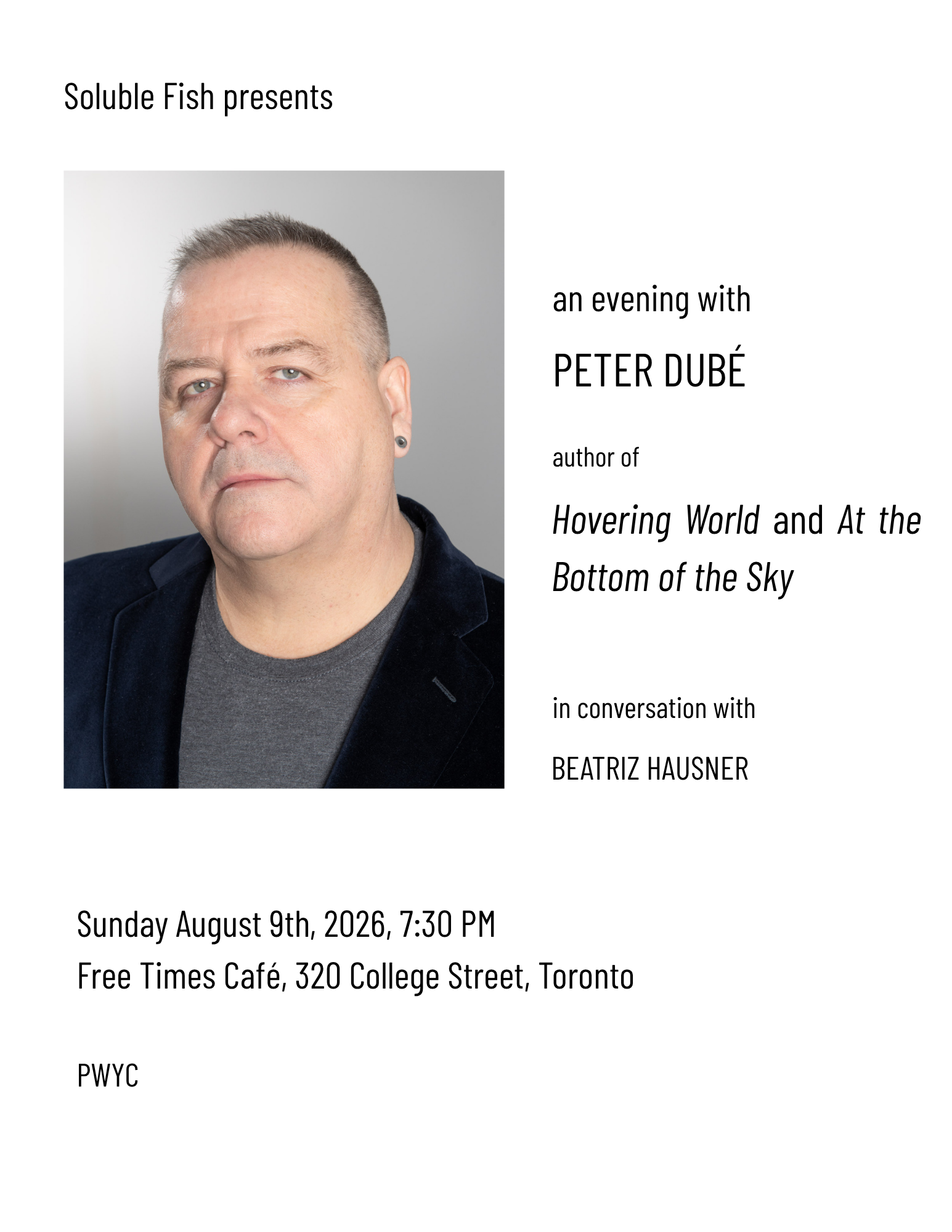
Sunday August 9, 7:30 p.m.
An evening with Peter Dubé, author of Hovering World and At the Bottom of the Sky
In conversation with Beatriz Hausner
Free Times Cafe, 320 College St.
Beatriz Hausner interviews Peter Dubé on urban flanneurs, the varied permutations of surrealism, including queerness and the gothic, on the re-issue of the author’s Hovering World and At the Bottom of the Sky.
Peter Dubé is a multi-genre writer, translator, and independent scholar. He is the author, co-author, or editor of fourteen books and chapbooks of fiction, non-fiction and poetry. His most recent publication is the work of literary theory and criticism, Desire as Praxis: Towards a Queer Surrealism. His novella, Subtle Bodies, an imagined life of French surrealist René Crevel was a finalist for the Shirley Jackson Award, and his novel in prose poems entitled The Headless Man, was shortlisted for both the A. M. Klein Prize and the ReLit award. He was a member of the editorial committee of the contemporary art magazine Espace for 18 years. He lives and works in his hometown of Montreal.
Praise for Hovering World and At the Bottom of the Sky:
“Hovering World is surrealist in its every nerve. At the heart of the book is the idea of a city with limitless physical and metaphysical terrain.”
- Daniel Allen Cox, author of several novels and I Felt the End Before It Came: Memoirs of a Queer Ex-Jehovah’s Witness, from his introduction to this new edition
“The titles of each of these linked stories, named for Greek mythic figures, where characters reappear and disappear, give the reader a clue to the subject matter, providing a kind of archetypal key and structure. And though plot is not in the forefront, each story is an adventure in the sense that each challenges its characters in often profound subconscious or primitive ways.”
–Trebor Healy, author of Faun and Through It Came Bright Colors, from his introduction to this new edition
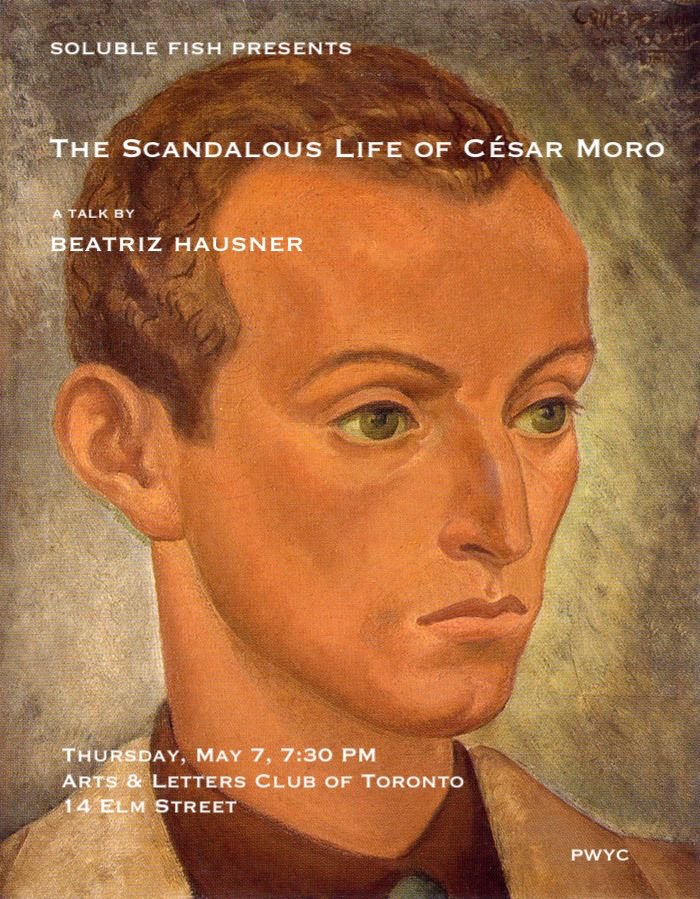
Thursday May 7, 2026, 7:30 p.m.
The Scandalous Life of César Moro
By Beatriz Hausner
Arts & Letters Club, 14 Elm St.
César Moro’s eponymous poem is the title of Beatriz Hausner’s talk, where she delves into one of the greatest voices of Twentieth Century surrealism, and, as she sees it, the most defining influence on her own writing. Inventive, experimental in his poetics and bilingualism, radical in his thinking, queer, unyielding of his principles, César Moro was born in Lima in 1903, lived in Paris between the two World Wars, then in Mexico for more than a decade, and finished his days in Lima, in his words, “la horrible,” in 1956.
Beatriz Hausner is a poet who writes about poetics, literary and artistic culture, book history, and the many ways in which these topics intersect, especially within the context of contemporary and historical surrealism. She Who Lies Above is her most recent poetry collection and can be obtained through Book*Hug Press, and independent bookstores.
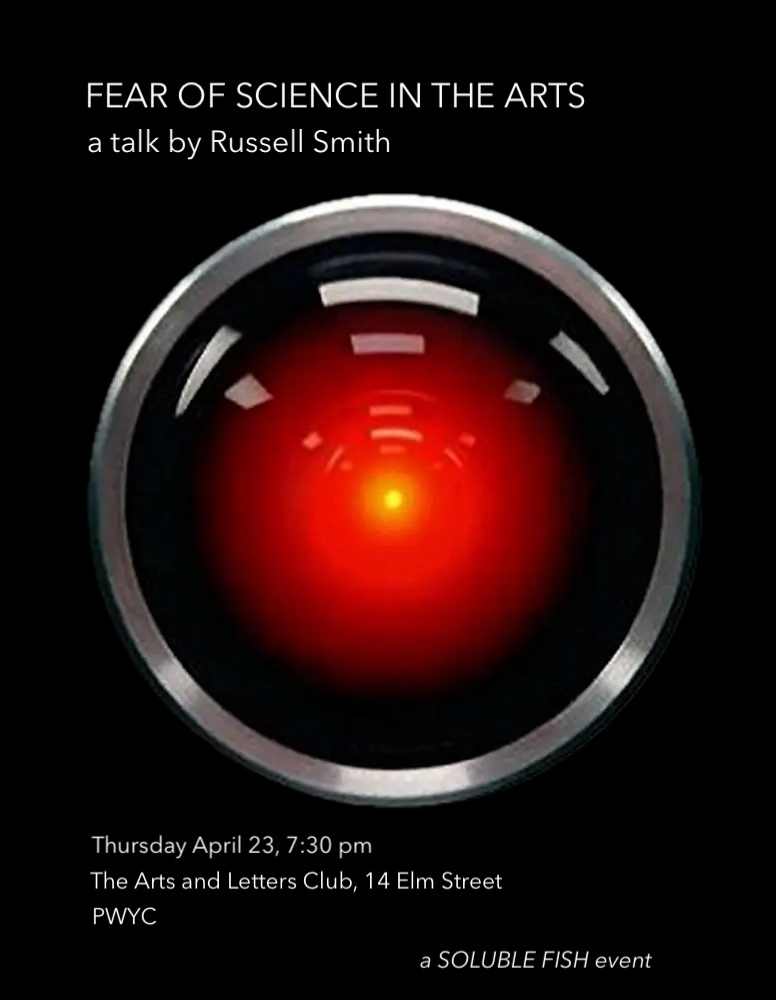
Thursday April 23, 2026, 7:30 p.m.
Fear of Science in the Arts
By Russell Smith
Arts & Letters Club, 14 Elm St.
Artificial intelligence is reviled in artistic and intellectual circles because it steals our published work for its training without compensating us, because it may replace artists and writers, and because it is linked with vast corporate power and environmental savagery. This has led to a puritanical approach that holds that any interaction with AI, of any kind, is unethical. But this emotional response is also inseparable from a natural fear of technology in progressive circles that is not always sensible.
Many artists are using AI in fascinating and creative ways. Should artists try to overcome their natural hostility to corporate power in order to see the creative future made possible by machine learning? Can fear of corporate hegemony be separated from fear of scientific research?
Russell Smith was the weekly arts columnist for the Globe and Mail for 20 years, and continues to explore topics relating to culture and its expression, including the effects of technology. His most recent novel is Self Care.
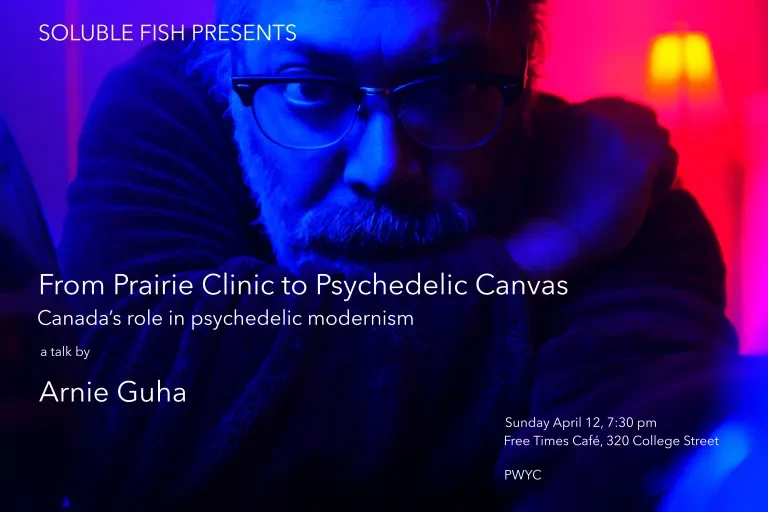
Sunday, April 12, 2026, 7:30 p.m.
From Prairie Clinic to Psychedelic Canvas: Canada’s role in psychedelic modernism
By Arnie Guha
Free Times Café, 320 College St.
This talk explores an unexpected Canadian lineage linking Lawren Harris, the Arts & Letters Club, and the psychiatrist Humphry Osmond, who coined the term “psychedelic” on the Saskatchewan prairie in the 1950s. Tracing a path from Harris’s early Toronto paintings to his luminous northern landscapes, and onward to psychedelic visual culture, it argues that Canada played a quiet but foundational role in rethinking perception in the Twentieth Century. At its core is a simple but radical idea: that art is not about representing the world, but about transforming how we see it.
Arnie Guha is a Toronto-based artist working under the handle Acid4Yuppies, whose practice explores perception, altered states, and the afterimage of place through layered digital and photographic processes. He is Executive Chair of the John B. Aird Gallery, Chair of the Advisory Board of Green College, UBC, and Past President of The National Club. Alongside his artistic work, Arnie writes and speaks on AI, perception, visual culture, and the shifting boundaries between art, experience, and cognition.
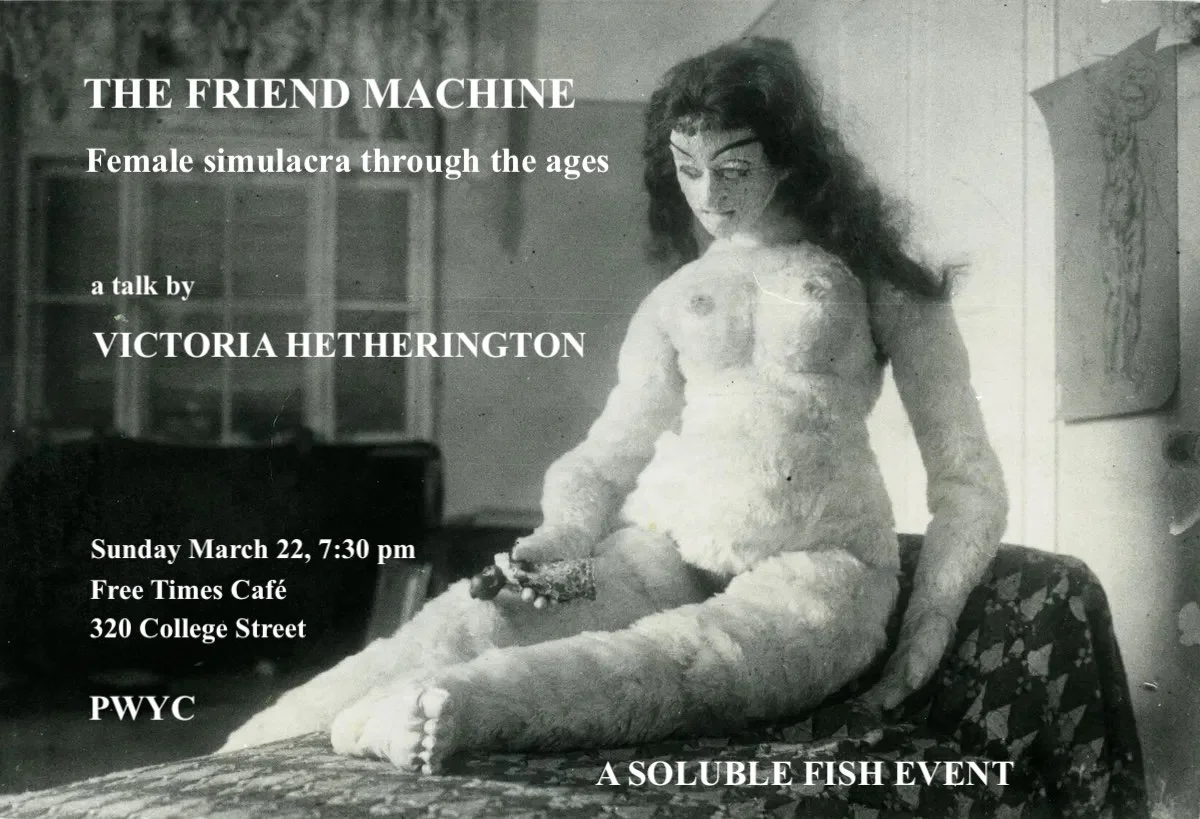
Sunday March 22, 2026, 7:30 p.m.
The Friend Machine: Female Simulacra Through the Ages
By Victoria Hetherington
Free Times Café, 320 College St.
Victoria Hetherington, author of The Friend Machine: On the Trail of AI Companionship, reveals the history of artificial lovers leading to the current boom in AI replicants.
Victoria Hetherington is the author of three science fiction books: Mooncalves (shortlisted for the Amazon First Novel Award) critically acclaimed Autonomy(2022) and the forthcoming Hotel Psyche (2027). Hetherington is also the author of two nonfiction books: Into the Mist (Kestrel, 2022) which explores and untangle a decades-long mystery surrounding a plane crash in rural Saskatchewan. Hetherington's latest nonfiction book, an investigative look into AI companionship, has elicited curiosity, horror in equal message: Hetherington has spoken to TIFA, Western University, Toronto Metropolitan University, and countless podcasts and radio shows about the effect AI companionship is having on human ability to connect with other humans. The book has been made into a CBC limited podcast series, due for release in June 2026.
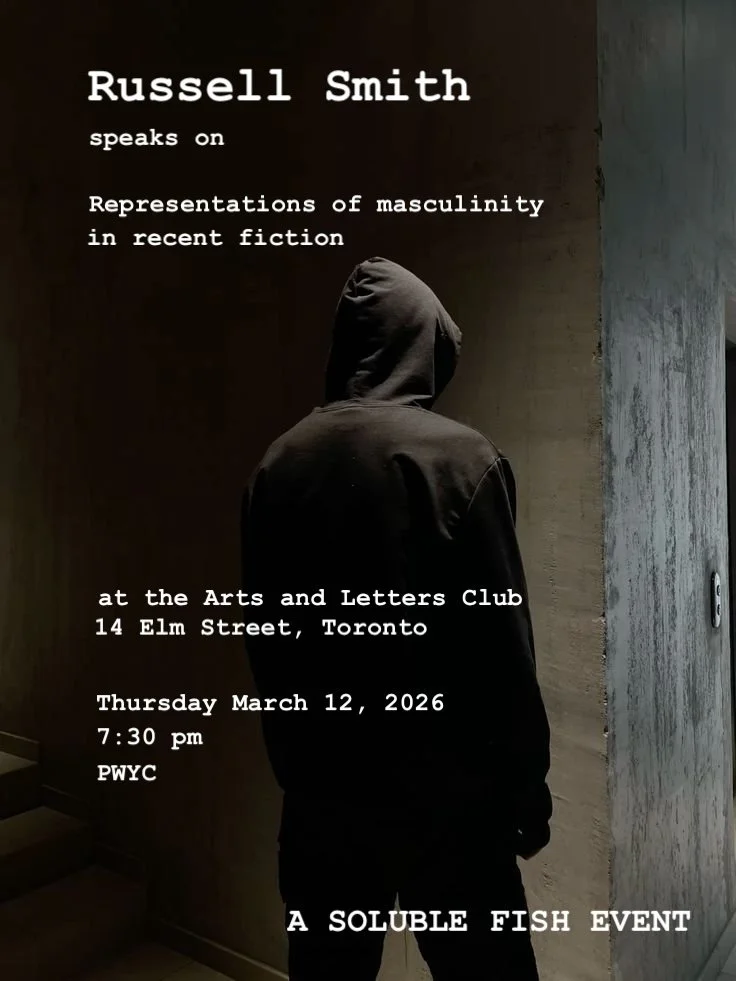
Thursday March 12, 2026, 7:30 p.m.
Representations of Masculinity in Recent Fiction
By Russell Smith
Arts & Letters Club, 14 Elm St.
In an age when traditional ideas of masculinity are in question and male alienation is leading to radicalization and violence, Russell Smith will speak on how the “crisis of masculinity” is being represented in international fiction. He will speak primarily on four recent works of fiction: Flesh by David Szalay, You’ve Changed by Ian Williams, Rejectionby Tony Tulathimutte, and Intermezzo by Sally Rooney.
Smith was the weekly arts columnist for the Globe and Mail for 20 years, and is known for his exploration of the male psyche in his own novels. His most recent novel is Self Care.
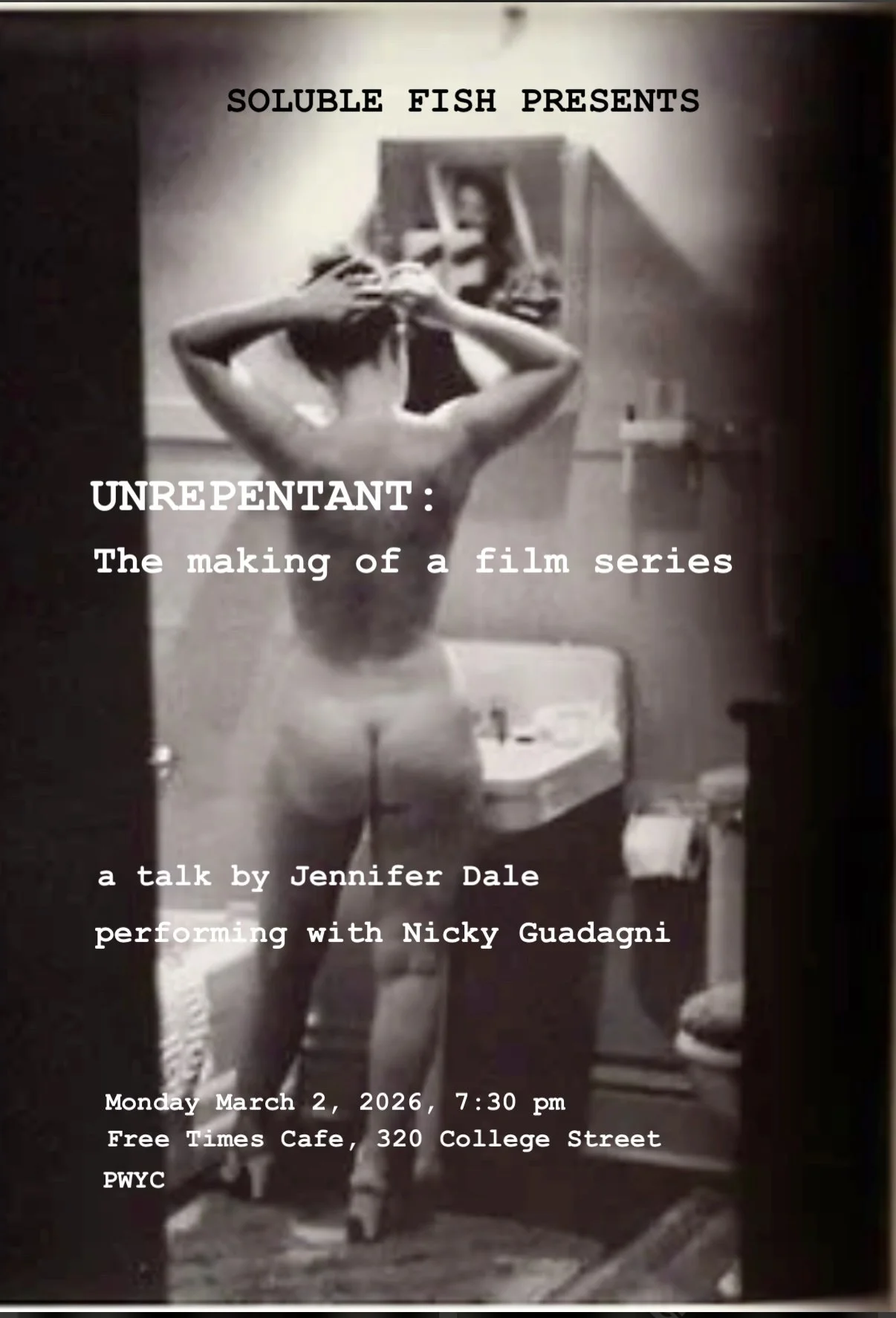
Monday March 2, 2026, 7:30 p.m.
Unrepentant: The Making of a Film Series
By Jennifer Dale, performing with Nicky Guadagni
Free Times Café, 320 College St.
Jennifer Dale’s talk will focus on UNREPENTANT, a film series profiling iconic women of the past, whose stories and impact have been obscured by the vagaries of history. The talk will trace the series’ naissance, its development and the filming of several titles, in collaboration with other actresses, writers and filmmakers. The films’ subjects are women as diverse as actresses Eleonora Duse and Tallulah Bankhead, Empress Theodora of Byzantium, Hypatia of Alexandria, Egyptian Pharaoh Hatshepsut, Empress Catherine the First of Russia, medieval Abbess Heloise du Paraclete, artists Artemisia Gentileschi, Harriet Hosmer, Emily Carr, Hilma af Klint and Dorothea Tanning; poets Veronica Franco, Sor Juana Inés de la Cruz and Mary Shelley; philosophers Margaret Cavendish and Hannah Arendt, scientist Mary Somerville, and existentialist Simone de Beauvoir whose novella Inseparable serves as inspiration for the script Jennifer Dale will read from with actor Nicky Guadagni.
Jennifer Dale is a veteran actor of Canadian theatre, film and television. She is the recipient of an Outstanding Achievement Award from Toronto Women in Film and Television and a Lifetime Achievement Award from the Academy of Canadian Film and Television, as well as international awards for her leading role in the feature film Into Invisible Light which she also co-wrote. Selected film credits include, Suzanne, The Adjuster, Cadillac Girls, Whale Music, and most recently David Cronenberg’s The Shrouds. Television roles include, Saving Hope, Suits, Lost Girl, Schitt’s Creek, Grand Larceny, Rumours, Monk, Sex Life, Coroner, among others. Since 2022 she has spearheaded Unrepentant, the series profiling iconic women of history, as the lead writer, producer and actor.
Nicky Guadagni has been an actress for more than 50 years performing on stage, many CBC radio dramas, TV and film and been nominated for five Gemini awards and won two. She was a member of the repertory company for A&E’s Nero Wolfe, and a member of the cast of the film Cube. Recently she was seen as Aunt Helene in the film Ready or Not and a guest spot on Reacher. She has produced two one person shows - Hooked (for which she won the best actress award for Toronto’s Dora Mavor Moore award) and SMART, the story of the Canadian/British writer Elizabeth Smart which played at Videocab in the spring of 2025.
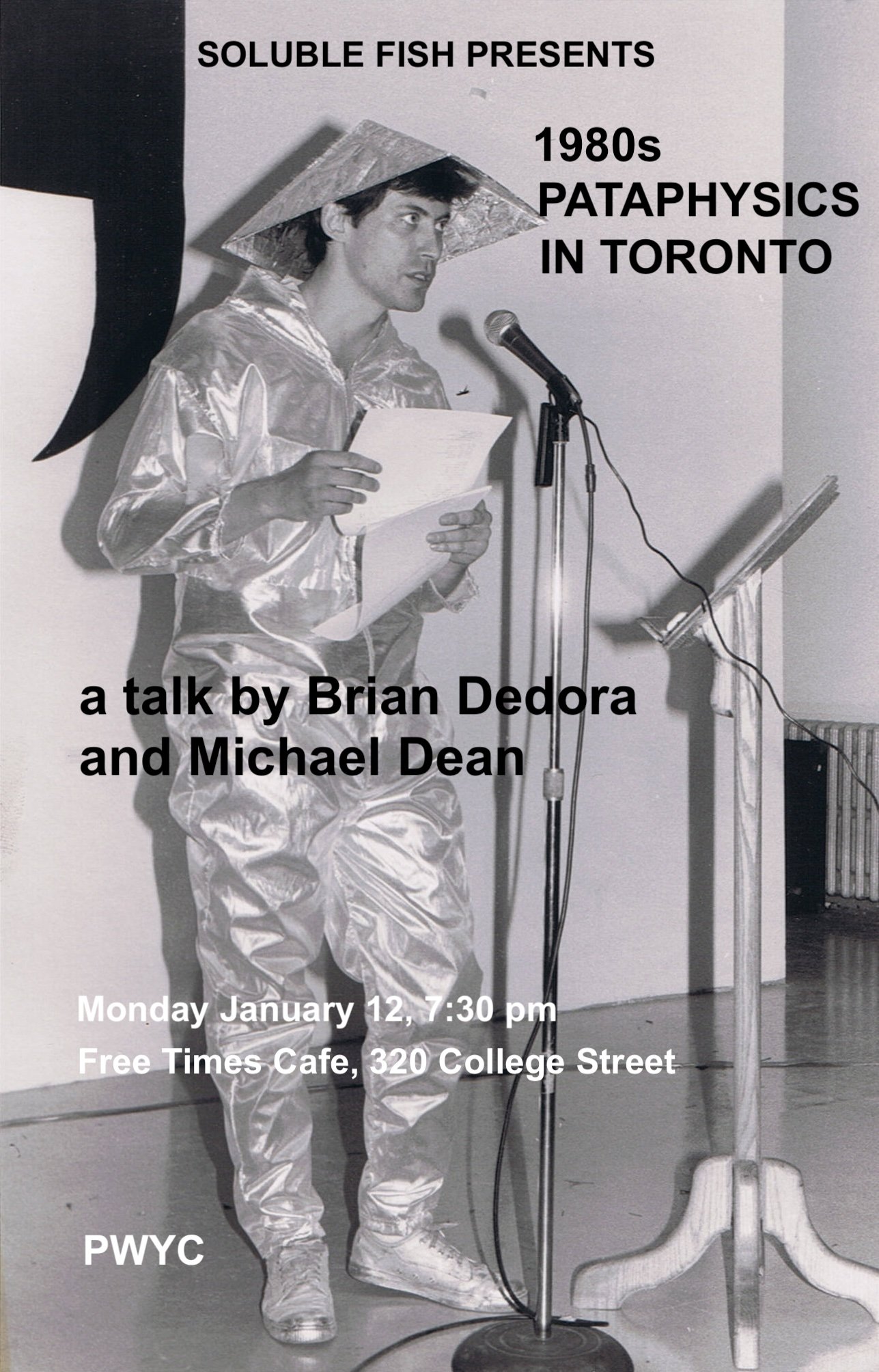
Monday January 12, 2026, 7:30 p.m.
1980s Pataphysics in Toronto
By Brian Dedora & Michael Dean
Free Times Café, 320 College St.
Brian Dedora & Michael Dean, through an extensive photo archive, will walk an audience through three Toronto Pataphysical events held in 1981 & 1985.
Brian Dedora, writing and being published since 1977 explores “experimental” forms in poetry, prose and performance has also developed an analogue photography practice of sequential image/text making. The Apple in the Orchard published by 1366Books, wholly dedicated to experimental prose, was released in 2024. Dedora, 45 miles up the road in Bradford, lives through his Leica and Waterman pens.
Michael Dean is a writer living in Toronto. He has been a sound poet and performance artist, having performed in Europe and across Canada. He is the author of In Search of the Perfect Lawn and The Walled Garden and is founding director of The Institute of Linguistic Onto-Genetics, where Dean conducts Pataphysical research.
2025
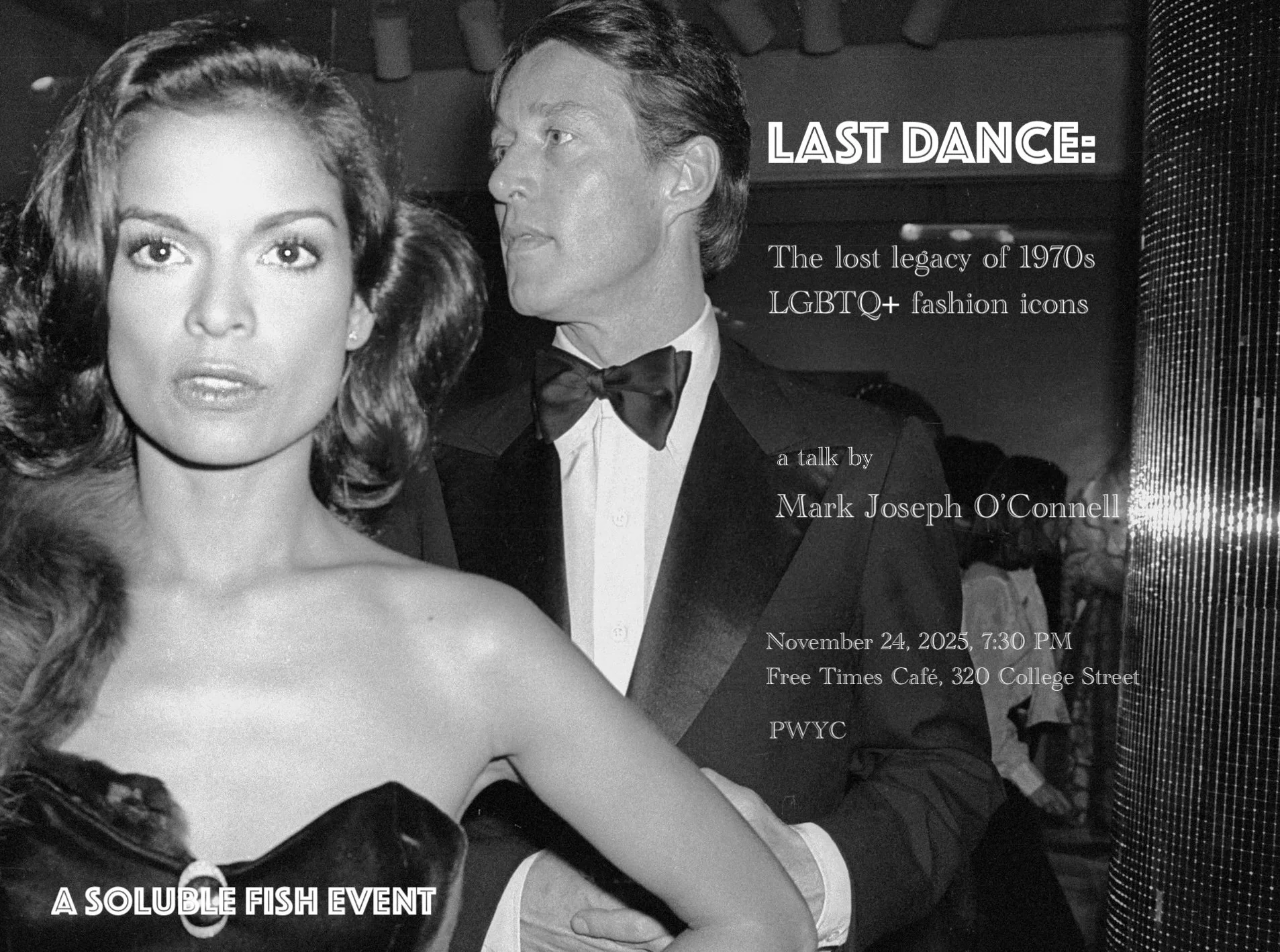
Monday November 24, 2025, 7:30 PM
Last Dance: The Lost Legacy of 70s LGBTQ+ Fashion Icons
By Mark Joseph O’Connell
Free Times Café, 320 College St.
Join us for a celebration of three visionary LGBTQ+ designers: Halston, Way Bandy, and Scott Barrie, whose groundbreaking contributions to fashion and beauty in the 1970s defined an era of glamour, freedom, and bold self-expression. In Last Dance Dr. Mark Joseph O'Connell revisits their iconic work in design and makeup artistry, highlighting their creative brilliance and the lasting imprint they left on style history before their lives were tragically cut short by the AIDS crisis. This talk pays tribute not only to their artistry but also to the cultural vibrancy they embodied at the height of glamorous disco decadence.
Dr. Mark Joseph O’Connell is a professor of fashion studies at Seneca Polytechnic, Toronto, Canada. His research focuses on visual culture and political economy within the history of fashion. His monograph Canadian Fashion Economies: A Select History of Fashion Culture, Commerce, and Colonializationwas published by Bloomsbury UK, 2025. He is the author of Lilac Time at the Rodeo, Stories of Identity AIDS & Fashion (2021) and Lilac Time at the Rodeo 2, Marie Debris, David Wojnarowicz, Martin Wong (2024). His articles have been published in Fashion Theory; Textile: The Journal of Cloth and Culture; Fashion, Style & Popular Culture; Queer Studies in Media & Popular Culture and Fashion Studies. In addition to his academic research Mark is also an artist and writer of fiction, and prior to teaching worked as a designer both in-house at M.A.C Cosmetics and for his clothing line Modular Menswear. Current work: markoconnellstudio.com.
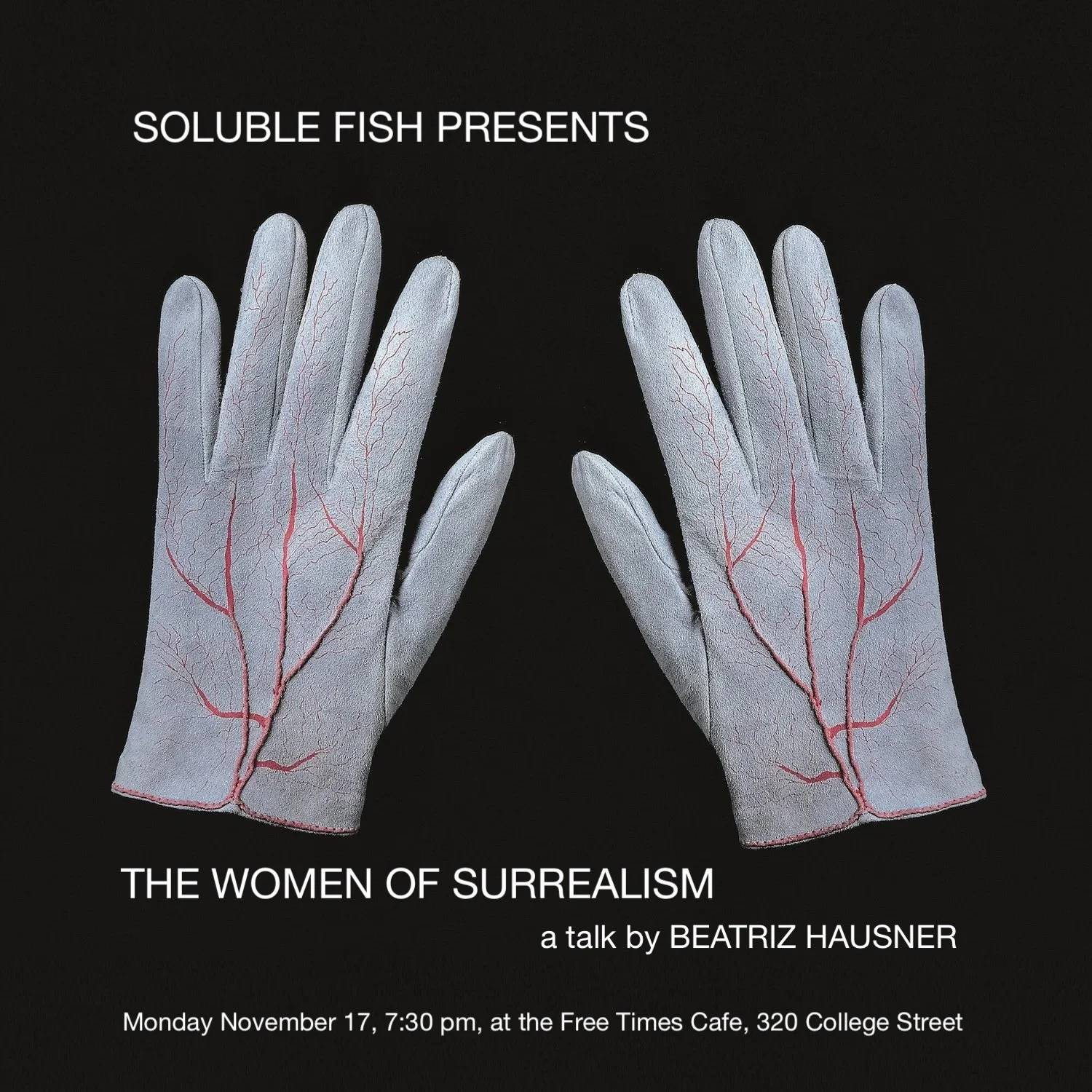
Monday November 17, 2025, 7:30 PM
The Women of Surrealism
by Beatriz Hausner
Free Times Café, 320 College St.
Women have been at the forefront of the surrealist movement since its inception one hundred years ago. They have fought to tear down societal barriers to the liberation of mind and body and aspired to absolute freedom. Beatriz Hausner will provide a general overview of the works and lives of emblematic figures of surrealism, like Meret Oppenheim, Claude Cahun, Dorothea Tanning, Lee Miller, Toyen, Joyce Mansour, Mimi Parent, Leonora Carrington, Remedios Varo placing special emphasis on contemporary women surrealists like Annie Le Brun, Susana Wald, Virginia Tentindo, Penelope Rosemont, Rikki Ducornet, Alice Farley, Lurdes Martínez and Toronto’s own Sherri Higgins.
Beatriz Hausner is the author of several poetry collections, including Enter the Raccoon, Beloved Revolutionary Sweetheart, and recently She Who Lies Above. She has translated many of the poets of Spanish American surrealism and writes about the movement in Latin America and its principal exponents. She is the current editor of Someone Editions and Editor in chief of the surrealist zine The Philosophical Egg.
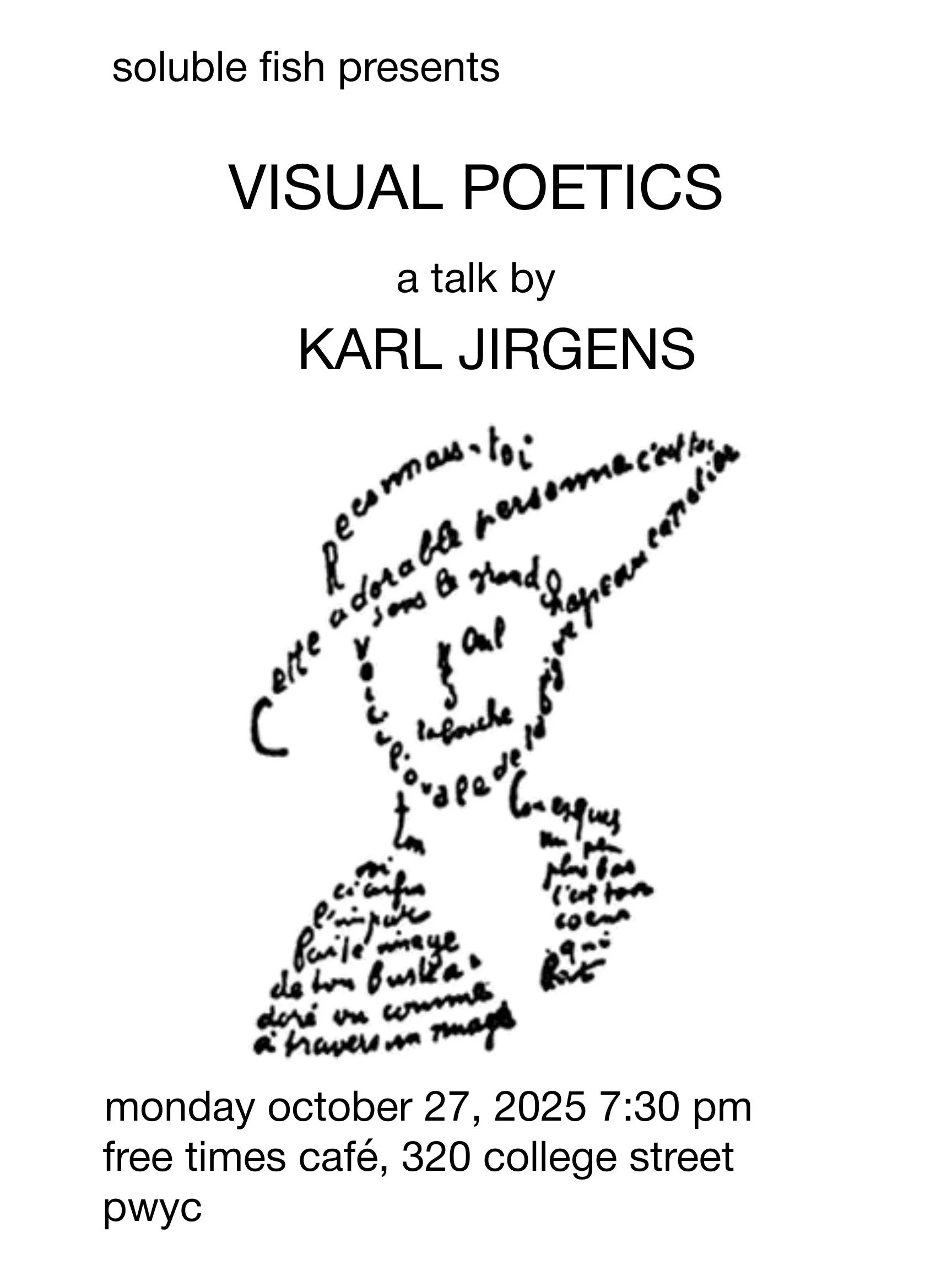
Monday, October 27, 2025, 7:30 p.m.
Visual Poetics
By Karl Jirgens
Free Times Café, 320 College St.
Visual Poetics (sometimes known as “Concrete” poetry) is one of the many ways artists deliver textual visualisations by providing beautiful art works. Many established artists use this technique, and you will hear about it and see many illustrations during this talk. Artists range from France’s, Guillaume Apollinaire to Canada’s, Derek Beaulieu. This form of visual expression has been practiced since the beginning of time, going back to the ice ages, to ancient hieroglyphics, more recently to European Dada artists, and right up to the present! Karl Jirgens is a specialist in this form of expression and will be happy to share recent controversies, examples, and visuals taken from the world of Vispo which has very strong Global roots including in Canada. Some of our finest artist/writers lead the way in this form of art.
Karl Jirgens, former English Dept. Head (U Windsor), former Professor at York University and University of Toronto, is author of six books (Coach House, Mercury, ECW, The Porcupine’s Quill and Exile Editions). Jirgens edited two books (on painter, Jack Bush [Coach House], and poet, Christopher Dewdney [Wilfried Laurier, UP]). His scholarly and creative texts are published globally (recently in Japan, as well as Australia, Germany, USA, and Canada. His poetry was selected for Best Poetry of Canada, 2023. Jirgens founded, edited & published Rampike magazine, featuring celebrated international artists, writers, and theorists. Rampike is print archived at the Thomas Fisher Library (University of Toronto), and it is digitally archived (free; at the University of Windsor c/o the Leddy Library: https://scholar.uwindsor.ca/rampike/about.html). Jirgens prize-winning short-fiction collection, The Razor’s Edge was published in 2022. His latest book of poems (Travesties is published by Exile Editions, edited by Beatriz Hausner) and will be released in Autumn of 2025!
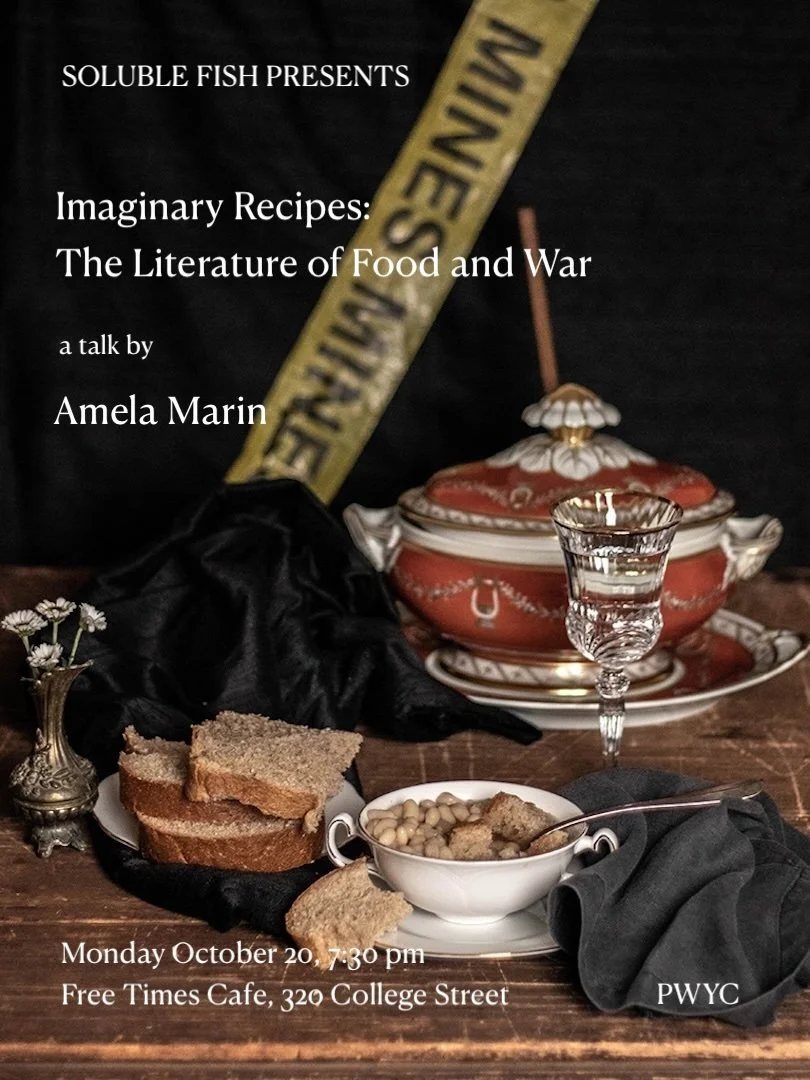
Monday, October 20, 2025, 7:30 p.m.
Imaginary Recipes: The Literature of Food and War
By Amela Marin
Free Times Café, 320 College St.
Amela Marin asks “How do we write about war when its horrors defy language? For me, the answer lies in food. It has become my literary lens for documenting the experience of war, not just for survival, but as a means to preserve dignity, culture and identity.” Drawing from her writings on food during the siege of Sarajevo (1992-1996), Amela Marin provides a meditation on food both as a daily obsession and a metaphor for loss and resilience, adding, “Through fragmented memories of what we ate, what we missed and what we invented from nothing, I try to answer some questions: how can a list of ingredients, a description of a shared meal, or the absence of food on the table convey the psychological and physical toll of war. How do we write about hunger without reducing it to statistics?” Amela will speak on the ways she draws on the power of food to bear witness through her writing and image-making.
Amela Marin is a writer and translator whose work explores food, memory, war and their lingering echoes. Her essays and stories have appeared in literary journals across the former Yugoslavia and internationally in Gastronomica, Poetry Today, Meta, Descant, PRISM International, and on BBC Radio, among others. Her memoir, The Unbearable Lightness of Wartime Cuisine, was featured in The Gastronomica Reader (University of California Press), and her novella The Sea, published in Canada was recognized as a notable first-fiction book in the The Globe and Mail. Marin has also translated works by literary icons such as Lawrence Durrell, Saul Bellow, Susan Sontag and Sylvia Plath. On her Substack, Imaginary Recipes: Stories from War and Peace, she reflects on war, beauty, food, and the absurdities of history, all with a touch of humour and the occasional recipe, as well as her own food photography.
Monday August 25, 2025, 7:30 p.m.
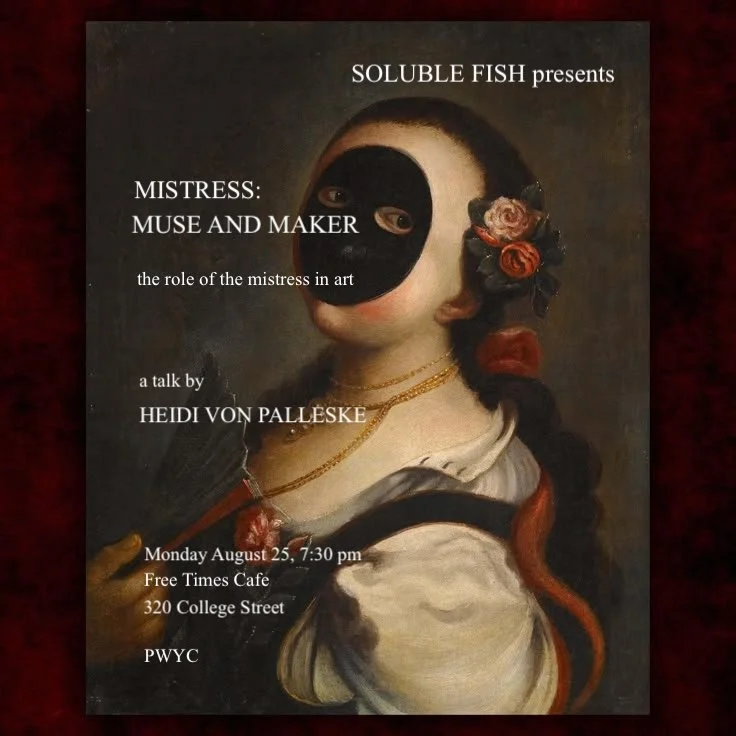
Mistress, Muse, and Maker
By Heidi von Palleske
Free Times Café, 320 College St.
Adored or condemned, sacred or profane, the mistress has always defied easy definition. She is both a figure of desire and a target of moral suspicion, her existence challenging conventional notions of femininity, fidelity, and propriety. Yet, no matter where one’s judgment may fall, her influence on art is undeniable. She has inspired masterpieces, and at times, seized the brush or pen herself—stepping beyond the boundaries “respectable” women could not cross. Her story is one of passion, rebellion, and art’s restless spirit, leaving a legacy that still stirs the imagination.
Heidi von Palleske is an actress and writer known for her bold and diverse work on screen and on the page. She has portrayed characters as unforgettable as the dangerous Irish madame in the recent film Bordello and the sensual lover of both twins played by Jeremy Irons in David Cronenberg’s classic Dead Ringers. As the author of the acclaimed novel Two White Queens and the One-Eyed Jack and a provocative collection of erotic sonnets, von Palleske brings a unique blend of artistry and insight to her work. In Mistress, Muse, and Maker, she explores the ways the mistress—both muse and creator—has shaped the history of art, challenging convention and igniting inspiration.
Monday July 28, 2025, 7:30 p.m.
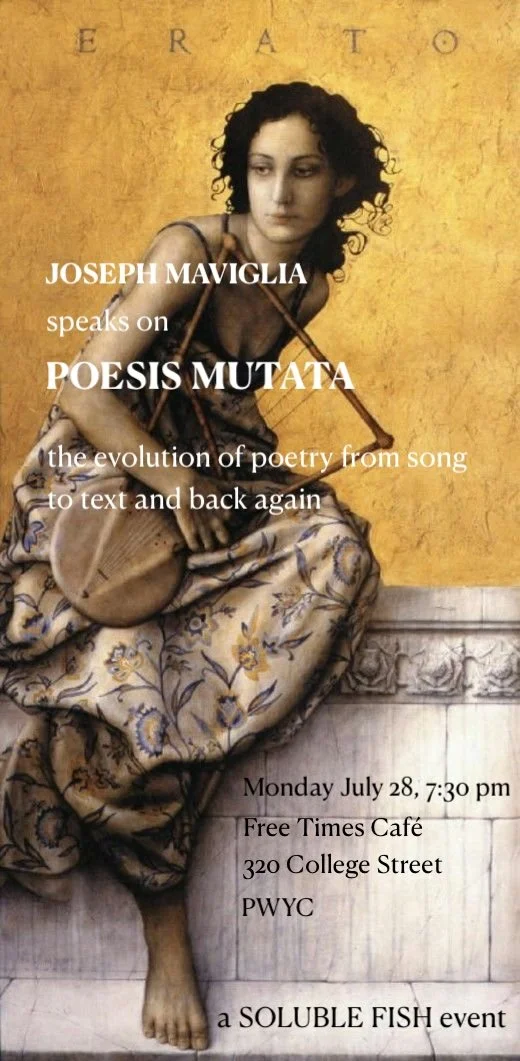
“Poesis Mutata”: The Evolution of Poetry From Song to Text and Back Again
By Joseph Maviglia
Free Times Café, 320 College St
Has poetry survived and evolved through time from canonical text to song lyric and to the symbolic suggestion of it? Poetic usage exists in almost every corner of contemporary culture. From political speech to authentic traditional written text poetry, it is impossible not to find the symbolic power of poetry furnishing the vast artistic, commercial and political landscape. Is it still poetry if it isn’t canonical written text? Is true pure poetry in demise or has it transformed itself beyond our wildest dreams?
In the tradition of spoken word, performance poets and singer-songwriters, Joseph Maviglia is renowned for his energized musical performances, written text and non-fiction essays. Joseph’s poetry has been published extensively and his books include, A God Hangs Upside Down (Guernica Editions) and Freakin' Palomino Blue (Mosaic Press). His latest work of non-fiction Critics Who Know Jack: Urban Myths, Media and Rock and Roll (Guernica Editions) delves into critical commentary on the inter-relationships of artistic expression in all mediums on subjects ranging from TV programs, films, song lyrics, social and political trends, both in traditional and social media. Joseph lives in Toronto. His most recent collection is In a Cage of Sunlight (The Selected Works of Joseph Maviglia), (Guernica Editions 2025).
Monday June 16, 2025, 7:30 p.m.
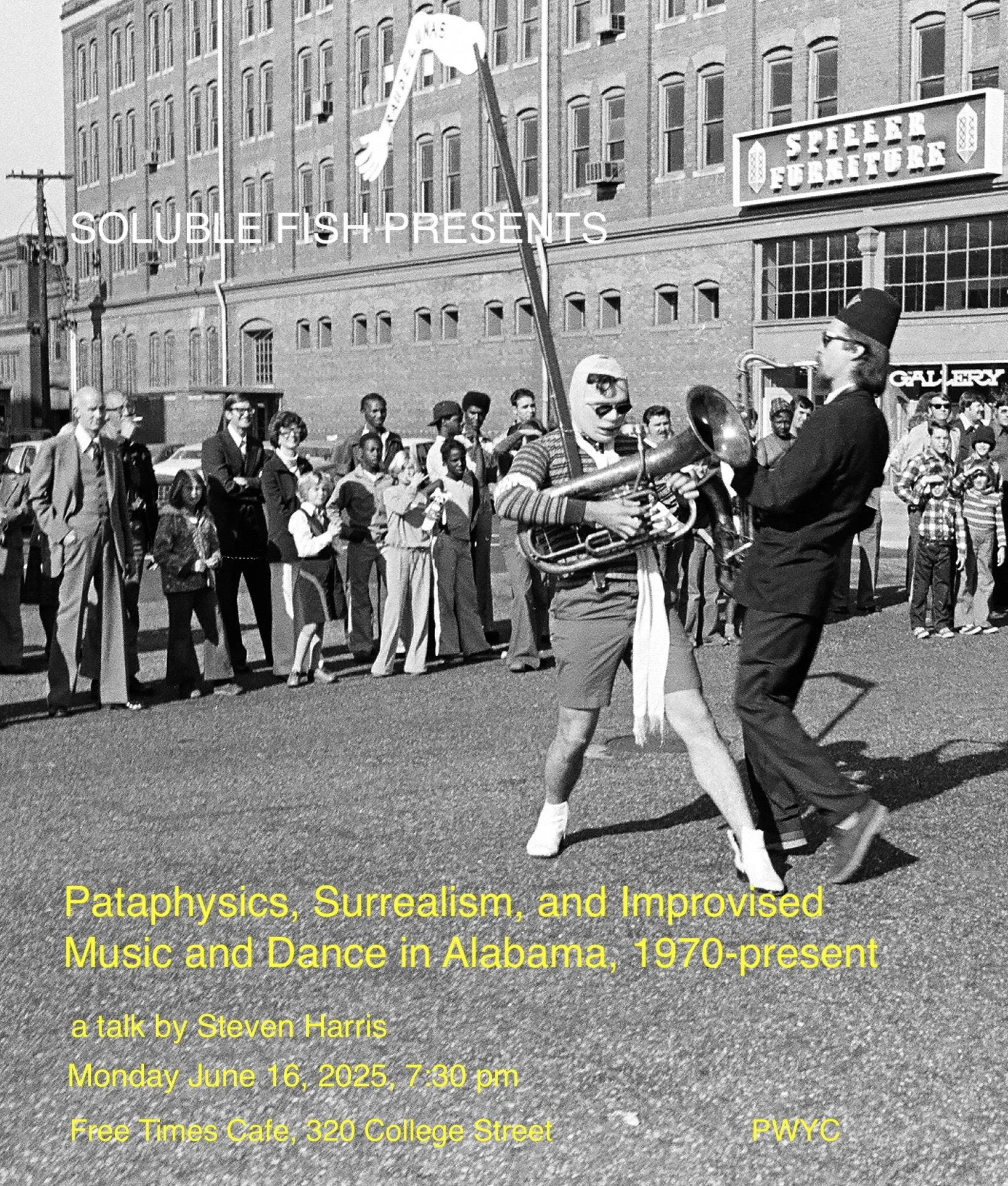
Pataphysics, Surrealism, and Improvised Music and Dance in Alabama
By Steven Harris
Free Times Café, 320 College St.
A group of young people began improvising music and dance together in Tuscaloosa, Alabama in the early 1970s. Soon calling themselves Raudelunas, they embraced pataphysics (the ‘science of imaginary solutions’) and organized art exhibitions and musical and theatrical events, and released several recordings of their music through the 1970s. Four of the Raudeluni moved to Birmingham in the late 1970s and founded a surrealist group there, initially called Glass Veal, while continuing to improvise music and dance and to tour nationally and internationally. They too organized several art exhibitions, published periodicals, and released recordings of their music on LP and CD—many of them under the name Trans—and were well-connected with other improvisers and surrealists in Europe and North America. While they have mostly sailed under the radar of critical attention, they deserve recognition both for the quality of their achievements and for the creative difference they made with Southern attitudes and with American culture more broadly.
Steven Harris is an art historian living in Edmonton who has written about pataphysics, Fluxus, Cobra, and surrealism: Surrealist Art and Thought in the 1930s appeared in 2004, articles in Art History, October, and the Oxford Art Journal, among other venues, have been published before and since, and he was co-editor of the International Encyclopedia of Surrealism in 2019, to which he contributed numerous entries. He has also published catalogue essays in Alberta and abroad, including one for the centennial exhibition of Asger Jorn in Copenhagen in 2014. He has interviewed most of the living members of the overlapping collectives in Alabama that he will be discussing in his talk, and will soon be publishing a book about them.
Monday May 26, 2025, 7:30 p.m.
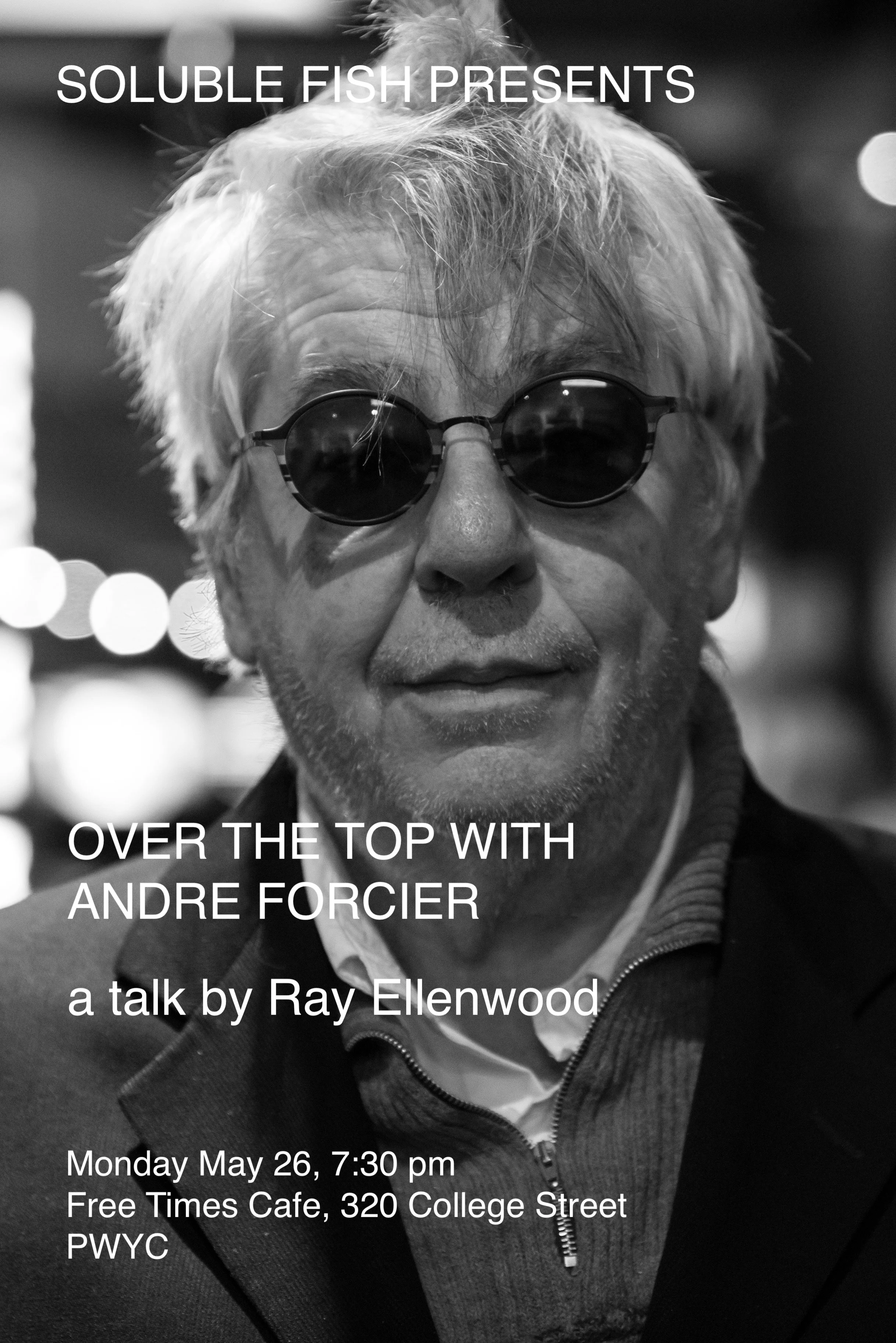
Over the top with André Forcier
By Ray Ellenwood
Free Times Café 320 College St.
It’s Montreal in the 1950s. A kids' baseball team is at war with the Catholic Church. A local schoolteacher and an elderly printer want to spread the freedom of words such as "Ababouiné" and to get the church out of education and the courts, but they are beaten down. Things get ugly in an over-the-top mixture of social/historical commentary and extravagant humour typical of André Forcier.
Over the past year, Forcier and his films have been celebrated widely in Québec, as well as in New York, Baton Rouge, and even in Florac and Cannes, France, but they are completely ignored by distributors and the media in Toronto. Ray Ellenwood, who had a small part in the English sub-titling of Ababouiné andhas since become a great fan of André Forcier, will not only discuss the film and its director on May 26, but can provide the link for anyone interested to see Ababouiné beforehand,at their leisure. You can email him at rayellen@yorku.ca
Ray Ellenwood is a retired professor of English, York University, and author of ten books of translation, French-to-English, mostly of Quebec literature. Besides many articles and translations related to the Automatist movement, he published Egregore: A History of the Automatist Movement of Montreal (Toronto: Exile Editions, 1992). Among his most recent publications is a translation of, and introduction to, Claude Gauvreau's opera libretto, Le vampire et la nymphomane / The Vampire and the Nymphomaniac (Toronto: One Little Goat and Nouvelles Éditions de Feu-Antonin, 2022).
Monday April 28, 2025, 7:30 p.m.
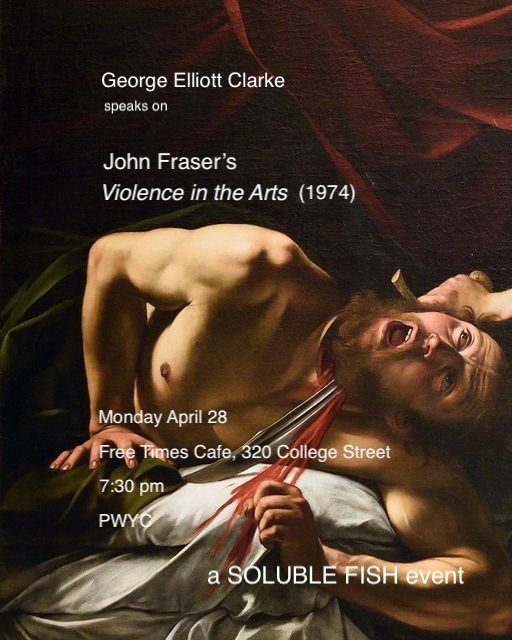
John Fraser’s Violence in the Arts (1974)
By George Elliott Clarke
Free Times Café 320 College St.
John Fraser's signal book, Violence in the Arts (1974), turns 51 this year, and just because you've never heard of it is no proof of its irrelevance.
The late Briton, Cambridge-U-educated, Dalhousie University English prof (1928-2023) did not feel that either Hannah Arendt or Susan Sontag went far enough in hinting at a poetics of violence that is neither a justification of the banal or of the campy. Rather, Fraser, publishing in 1974, casts a wide net, taking in Nazi spoofs (The Producers [1967]), The Godfather (1972), the James Bond novels and films, plus Shakespeare and porn, all while asking the question, 'Which violences can be played for laughs and which can "sharpen" judgment and require serious, intellectual reflection, and why?' Literally a student of Fraser, "back in the day," poet and scholar George Elliott Clarke leads a discussion of Fraser's insights, including his proviso that "Far from being mindless, violence is usually the cutting edge of ideas and ideologies..."
Monday, March 31, 2025, 7:30 p.m.
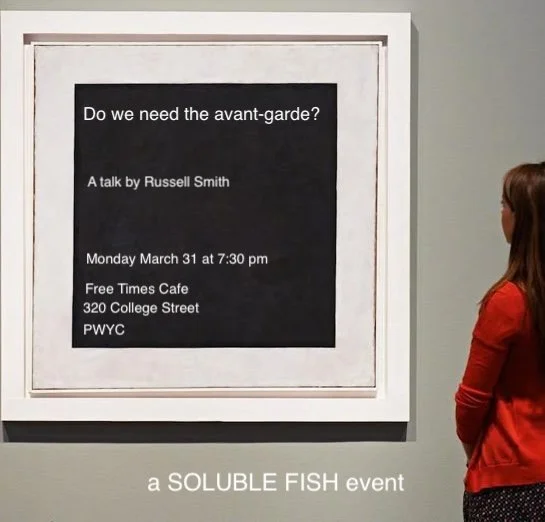
Do We Need the Avant-Garde?
By Russell Smith
Free Times Café, 320 College Street
In an age when artists feel that their role is to help effect change in an unjust society, is there any role for art purely preoccupied with its form? Is there a political role for art that is formally experimental?
Russell Smith will approach this question through a reflection on the disputed meaning of various terms — modernist, avant-gardist, abstract, conceptualist — using examples of influential movements in visual art, literature and music.
Sunday, February 2, 2025, 7:30 p.m.
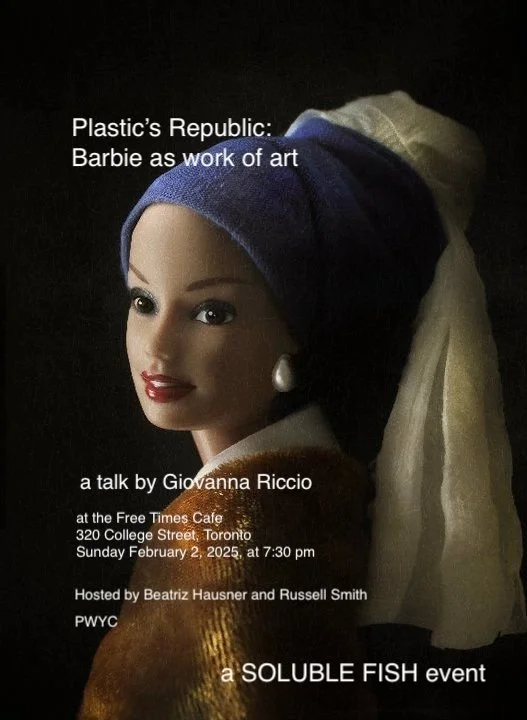
Plastic's Republic: Barbie as Work of Art
By Giovanna Riccio
Free Times Café, 320 College St.
“Plastic operates reciprocally to designate a force that molds or a material that can be molded.” (Heather Warren-Crowe)
Referencing Walter Benjamin’s influential essay, The Work of Art in the Age of Mechanical Reproduction, we can posit that plastic did for objects, what film did for images. As Barbie’s essence, plasticity in form and narrative makes her capitalism’s perfectly accommodating commodity—ideal for replication and mass marketing. At her inception in 1959, Mattel registered Barbie as a work of art and over six decades, more than a billion Barbie dolls have been sold worldwide; Barbie is the ultimate piece of mass art.
2024
Sunday, November 10, 2024, 7:30 p.m.
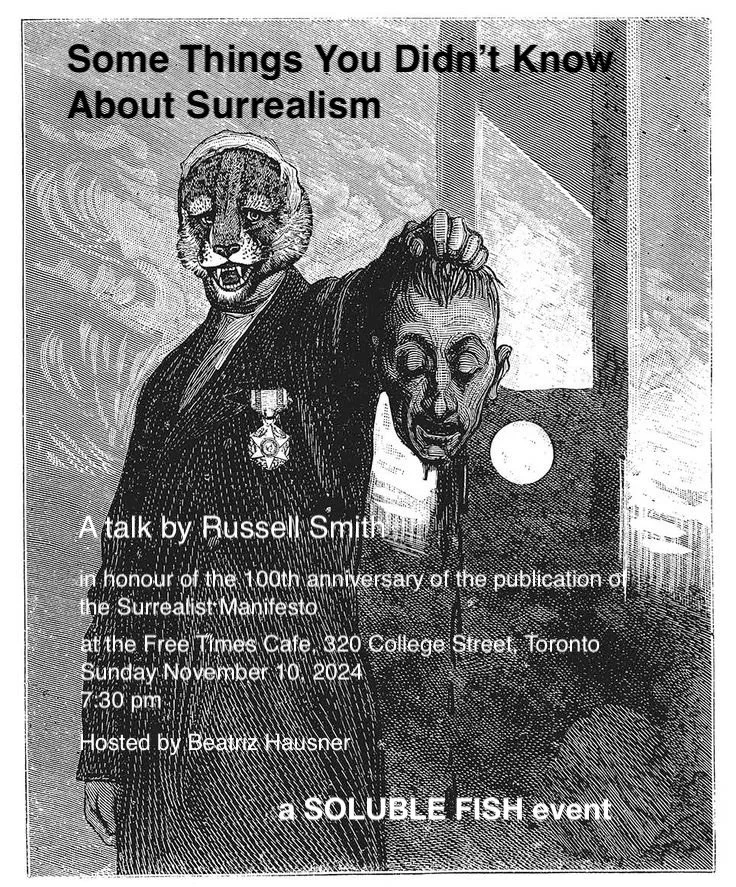
Some Things You Didn’t Know About Surrealism
By Russell Smith
Free Times Café, 320 College St.
This inaugural presentation in the soluble fish speaker series was delivered in honor of the 100th anniversary of the publication of André Breton’s Surrealist Manifesto.